If anybody has noticed, I usually post a new article every Wednesday. However this week I do not have time to put an article onto the blog because I am too busy preparing for my 1000 Charity Challenge. Take a look at other posts from this month to see my progress: About Raising Money for Charity, 1000 Challenge Update, SMART Goals and The Final Week.
Thank you for all the notes of support and links to websites to help me find my vocabulary.
Don't forget about this blog! In July we will look at some more websites for listening practice (continuing my recommendations from this previous post), some suggestions about useful people to follow on Twitter, some more recommendations about other websites that will help you improve your English and we might look at some phrasal verbs and ways to learn them. Also, I hope that there will be a guest post (an article from somebody else)... but I'm keeping that a secret at the moment. :-) Keep watching the blog to find out more.
I'll also try to post a video of Friday's event as soon as possible.
Wish me luck!

Wednesday, June 29, 2011


Monday, June 27, 2011
1000 Challenge – The Final Week!
 |
| Don't worry, things are not really this bad. |
So I have been very busy recently trying to find and learn my 1000 new Spanish words and phrases. The picture above gives you an idea of how my brain feels at the moment. :-) The work is not over yet but I think I need to give all of you an update.
Here is how my general graph of learning looks at the moment. I’m actually feeling quite confident about this but obviously, I’ve got a lot of work still to do – and, these are my estimates. We don’t know how I will perform on the day of the event.
 |
| Columns 1, 2 and 3: 'How many words in total', 'English to Spanish', 'Spanish to English' |
What I know for sure is that by 8pm on Friday night, my challenge will be over and, hopefully, I will have raised some money for a local charity that needs help.
For more information about this charity and what the goals are you can click on these links to see pamphlets from the organisation, Promover Gualeguaychu – they are all in Spanish.
Thursday, June 23, 2011
Holidays
I've talked about repetition; the 75 times you need to really acquire new language (see previous post). Well holidays are a perfect way to use some of your English again and again and again.

 7. Oh, I've been there. Did you visit _____?
If you are studying in an English speaking country, this might be especially useful for you. Think about the questions you are asked when you return from holiday or just a long weekend. They are always the same:
“Where did you go? What did you see? What did you do? Did you enjoy it? Who did you go with? What was your favourite place? Oh, I’ve been there, did you visit ______? What did you think of ______?”
What a wonderful opportunity for your English! You know what questions to expect and you can learn, prepare and rehearse your answers.
Let's look at a few phrases you can use for each of these questions. Remember, vocabulary is good but learning and acquiring complete phrases helps with fluency. To make this post prettier, I've also included some photos of a recent holiday I had on the border of Argentina and Brazil. Enjoy
 |
| The ruins of a Jesuit mission, San Ignacio Mini, Misiones, Argentina |
1. Where did you go?
I spent a few days in… (you stayed in one place)
I spent a few days travelling around… (you stayed in one general area but visited a few specific places in that area)
I went/travelled up to… (if the destination was north)
I went/travelled down to… (if the destination was south)
I went/travelled over to… (if east or west)
I went with some friends up to…

2. What did you see?
Well, where to begin? (a rhetorical question for yourself, which gives you more time to think and explains you have a long story to tell)
I saw lots of stuff actually. I saw… (then give a list)

3. What did you do?
What did I not do? (a great reply that explains you did a lot of things – make sure you really emphasise the ‘not’ and say it with a smile on your face)
I did a bit of… (climbing, shopping, sunbathing, kayaking, hiking, waterskiing, reading… the list goes on and on and on)
I actually did a lot more than I expected. I… (then give details – this is if you did more than was in your original plan)
Not as much as I’d wanted. I… (then give details – if you did less than was in your original plan.

4. Did you enjoy it?
Definitely! It was exactly what I wanted. (it was a perfect vacation and it is what you excepted)
Definitely! It was exactly what I needed. (it was perfect and helped you to relax)
Immensely! (100% brilliant!)
Very much so, yes! (90-100%)
Hmm, not that much because… (30-40%)
Yeah, more or less, but I think _______ could have been better. (your vacation was 50/60% and there are one or two things you didn’t like – for pronunciation help with this, take a look at this previous post)


5. Who did you go with?
I just went by myself (no travelling companions; alone)
I went with…
I was going to go by myself but I ended up going with _________. (the original plan was to go alone but this plan changed and you went with another person)
6. What was your favourite place?
Well, I particularly liked… (you want to talk about a specific thing that you liked on holiday)
________, without a doubt. (a tag at the end of the answer to explain that one place was much better than all the other places)
That’s a difficult question. I guess I’d have to say… (if you are not sure about your answer or there was more than one really good place)
I probably enjoyed ______ more than anything else. (this is not as strong as ‘without a doubt’ and shows that there were a few things that you really enjoyed)
 |
| Breathtaking and spectacular, isn't it? |
 7. Oh, I've been there. Did you visit _____?
Yeah, what did you think of it?
Of course! (an obvious place to visit that would be impossible to miss)
No, we didn’t have time to go there.
No, we didn’t have the opportunity to go there.
No, I really wanted to but…
8. What did you think of_____?
I thought it was spectacular. (amazing)
I thought it was breathtaking. (very impressive)
To be honest, I wasn’t very impressed with _______ because... (under 50%)
It was alright but not as good as everyone was saying. (50-60% but people told you that it was 100% amazing)
It would have been great but it was spoiled by… (a good place/event was much less fun because of something that happened – bad weather, for example)

Wednesday, June 22, 2011
A Few More Changes
Hello all,
The main post will come tomorrow but I thought I would point out that I've just added a link to a brilliant site, www.phrasemix.com. Take a look in the right column and scroll down until you see PhraseMix.
Apart from that, you will probably notice that I have changed the appearance of the site a little bit. Hope you like it, I certainly do.
Gordon
The main post will come tomorrow but I thought I would point out that I've just added a link to a brilliant site, www.phrasemix.com. Take a look in the right column and scroll down until you see PhraseMix.
Apart from that, you will probably notice that I have changed the appearance of the site a little bit. Hope you like it, I certainly do.
Gordon
Thursday, June 16, 2011
SMART Goals for my 1000 Challenge
This is a short video explaining my S.M.A.R.T. goal of learning 1000 new Spanish words and phrases in one month for charity.
Inspired by Arina Nikitina's article.
Have a good weekend!
Wednesday, June 15, 2011
How much time do I need?
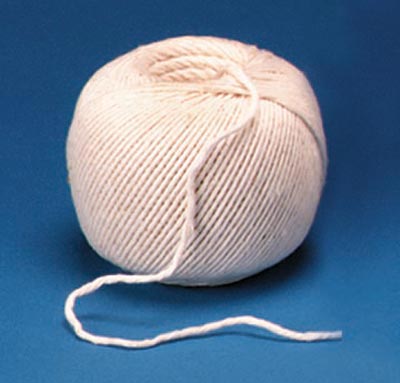 |
| How long is a piece of string? |
The answer to both of these questions is ‘It depends’.
What does it depend on?
Many, many things such as opportunity, motivation, how you learn, as well as what the best way is for you to learn personally. However, I will mention one thing specifically: learning doesn't and can’t happen all in class.
What does it depend on?
Many, many things such as opportunity, motivation, how you learn, as well as what the best way is for you to learn personally. However, I will mention one thing specifically: learning doesn't and can’t happen all in class.
1:4 Ratio of Time
First of all, a ratio is a relationship between two numbers. If I spend 1 hour preparing dinner and 1 hour eating dinner that means the relationship between preparing and eating is 1:1. However, if I spend 4 hours preparing dinner and only 2 hours eating it, then the ratio is 4:2 (or better to say 2:1) because 4 hours preparation equals 2 hours eating. (Don’t worry, this is NOT a blog about mathematics.)
 Recently I read a post about 10,000 hours on another teacher’s blog: “10,000 hours of hard practice to achieve mastery of one’s given discipline.” This basically means 10,000 hours of practice to be really good at something.
This started me thinking about 10,000 hours to learn a language. Maybe we can ‘break this down’ (divide this) into the four parts of language and communication: speaking, reading, writing and listening. Speaking is chatting with friends, talking to colleagues, speaking on the phone, etc, etc. Listening is also chatting with friends but can also be watching TV, watching youTube, listening to podcasts or audio language lessons, listening to music or listening to the radio. Reading can be done with a website, a blog, Facebook, a newspaper or a book – I recommend trying a book. Writing can also be on Facebook, writing on a blog, posting a comment on a blog (hint, hint, see 'Post a Comment' below), writing emails or even writing a journal.
So 10,000 hours is a lot of time but there are many different ways you can use that time. Remember, it's not all work - a lot of the time it can be a lot of fun!
 Now, I saw an infographic about how many hours of class an native English speaker (like me) needs to learn another world language. The shortest time (for similar European languages) was about 600 class hours. However, the hardest languages for native English speakers (Arabic, Chinese, Japanese and Korean for example) need 2200 class hours. These numbers are obviously averages but they give a general idea.
The information did not talk about learning English, but we can assume that English will be between 600-2200 class hours.
So I hope you see the importance of practice outside the classroom. Here is my last piece of mathematics, I promise:
This is a 1:4 ratio. For each hour you are learning English in class, you need four more hours of practice outside class… if you want to be proficient.
What do you think? What do you think your ratio of class:outside English work has been this year so far?

First of all, a ratio is a relationship between two numbers. If I spend 1 hour preparing dinner and 1 hour eating dinner that means the relationship between preparing and eating is 1:1. However, if I spend 4 hours preparing dinner and only 2 hours eating it, then the ratio is 4:2 (or better to say 2:1) because 4 hours preparation equals 2 hours eating. (Don’t worry, this is NOT a blog about mathematics.)

This started me thinking about 10,000 hours to learn a language. Maybe we can ‘break this down’ (divide this) into the four parts of language and communication: speaking, reading, writing and listening. Speaking is chatting with friends, talking to colleagues, speaking on the phone, etc, etc. Listening is also chatting with friends but can also be watching TV, watching youTube, listening to podcasts or audio language lessons, listening to music or listening to the radio. Reading can be done with a website, a blog, Facebook, a newspaper or a book – I recommend trying a book. Writing can also be on Facebook, writing on a blog, posting a comment on a blog (hint, hint, see 'Post a Comment' below), writing emails or even writing a journal.
So 10,000 hours is a lot of time but there are many different ways you can use that time. Remember, it's not all work - a lot of the time it can be a lot of fun!
Now, I saw an infographic about how many hours of class an native English speaker (like me) needs to learn another world language. The shortest time (for similar European languages) was about 600 class hours. However, the hardest languages for native English speakers (Arabic, Chinese, Japanese and Korean for example) need 2200 class hours. These numbers are obviously averages but they give a general idea. The information did not talk about learning English, but we can assume that English will be between 600-2200 class hours.
So I hope you see the importance of practice outside the classroom. Here is my last piece of mathematics, I promise:
2000 hours of class + 8000 hours of practice outside the classroom = 10000 hours
This is a 1:4 ratio. For each hour you are learning English in class, you need four more hours of practice outside class… if you want to be proficient.
What do you think? What do you think your ratio of class:outside English work has been this year so far?

Tuesday, June 14, 2011
EXTRA - Warming Up (a tip for IELTS and other exams)
 |
| My father helping me to get ready for the Brighton Marathon last year (2010). |
It’s also very important for mental preparation as well. You need to warm up for your big language event: the IELTS exam, or FCE, or CAE or whatever. One of the suggestions that Aaron Myers gave was to use his travel to an interview to listen to a Turkish audio lesson. For the day of your big event, you don’t want to focus on anything new so choose a piece of listening that you are familiar with (a podcast you have listened to a few times already, for example).
This warming up is necessary to ‘switch on’ your English and get your mind ready for the task.
If you have an English exam soon, good luck!
Subscribe to:
Posts (Atom)