Wednesday, July 27, 2011

Anybody having problems with the Present Perfect?

The present perfect is tricky. What do I mean by ‘tricky’? I mean it is sometimes difficult to understand and, in fact, it is used for a lot of different reasons. Many students learn these reasons but sometimes this means students can answer the question ‘What are the different uses of the present perfect tense?’ but they still can’t actually use the tense comfortably or accurately.

This is because students need to understand 3 things:
  1. Don’t worry, the present perfect tense is not the most common tense in English... but sorry, we still use it a lot! So this is a very important part of communication in English that you... can’t... ignore! 
  2. Making mistakes is good. If you are not sure how to use the present perfect then don’t, don’t, don’t avoid using it! We learn from our mistakes because mistakes = experience. 
  3. If you are not comfortable with the present perfect tense, then you need more experience with it. 
For this last part, I have a short activity for you.

1.  You are going to listen to a poem (in fact, lyrics to a song) that uses the present perfect tense a lot. Listen once and while you are listening make some notes about what verbs you hear. 

2.  Now listen one more time and see if you can add more to your notes. REMEMBER, these are notes... you shouldn’t be writing down every word. 

3.  Now with the help of your notes and this slide show, see if you can rebuild the whole poem – the final slide has the answers.  Each slide is visual help for one line of the poem.


You might know this song. It is by U2 and it’s called “Still Haven’t Found What I’m Looking For”. If you want a final challenge and a little bit more practice then do the interactive gap fill with a YouTube video of a live performance.

“Still Haven’t Found What I’m Look For” at Lyrics Training (remember to select a game mode: beginner, intermediate, advanced or expert)

or, just enjoy the original video below... :-)


Saturday, July 23, 2011

Dominic Cole's IELTS Blog (Blog Recommendation #4)

Anyone studying for that exam should know about this website.

Dominic Cole's IELTS Blog

Dominic Cole has obviously put a lot of time and work into producing some excellent materials to help students prepare for the International English Language Testing System test.  Here is one example of 10 Top Tips for IELTS Reading.

Spend 10-15 minutes looking around this website and I promise you it will be "time well spent" (a good way to use your time).

You can also 'like' this site and follow it on Facebook or follow Dominic Cole on Twitter.

Friday, July 22, 2011

Using the Phonetic Chart

Does the picture below scare or confuse you?


If the answer is yes, the you probably should watch this excellent video with Adrian Underhill that explains the phonetic chart.


For some more information about phonetics, see these previous posts about Phonetics & Pronunciation and my message written in phonetics to learners of English.  You could also try some of my Phonetic Film Quizzes.

And thanks to Adrian Underhill for making such a helpful video!  For more help from him you should read through his blog - Adrian's Pron Chart Blog.

Wednesday, July 20, 2011

People you should be following, pt 1 (Twitter)

This is the first of a few posts I will make to give you some recommendations about sites and people on the Internet that can help you to improve your English.

If you are learning English I'm sure you know there is a LOT of information on the internet to help you.  Unfortunately there is usually too much information on the internet and it is difficult to know what to follow.

These are some recommendations for learners who use Twitter.  I think these people produce useful and interesting things for English language learners which can really help you to improve your English.

@EFLintermediate & @EFLadvanced – Two great feeds for a wide variety of useful content, depending on your level.

@englishwithjo – I’ve got to thank a former student of mine, Bengü, for telling me about this resource.  This tweeter provides simple explanations and gapfills on Twitter.  Jo looks like an excellent resource to follow.

@eslpod - ESL Podcast's Twitter feed.  Lots of free material for listening and they will tell you when there is something new to listen to.  I’ve talked about ESLPod before, read my previous post to learn more.

@InglesenLomas – A great person to follow who provides lots of useful links for learning English, especially around songs and singing.

@LearnEnglish_BC – A great person to follow for new information and activities from the British Council for all learners of English.

@ListenandWrite – Improve your listening skills with this website.  By following the feed, you will not miss anything new.

@myenglishexam – This is the twitter account for a brilliant website for Cambridge exam preparation, Flo-Joe.  You will receive daily tweets that often give links to short 2 or 3 minute exercises to help you prepare for your big exams.

@SpotlightRadio – Spotlight Radio is a great listening resource for lower-level learners.  Here they will tell you when there is something new to listen to.  (To learn more about Spotlight, read my previous post)

@SuccEng – I’ve recommended Warren Ediger’s website in a previous post and this is another opportunity to stay connected with his clear explanations and practical suggestions for better English.

@VOALearnEnglish – Thanks to Marcelo for recommending this tweet account.  It connects to the Voice Of America Facebook page as well as the website.  Lots of good reading and listening materials.

@ykarabatov - Yuri Karabatov has tweeted on lots of useful websites and gives a lot of useful, sensible information about learning a language.  Take a look through his tweets and I'm sure you will find something useful for you!

If you follow any of these or you already follow some of them, then please leave a comment with your opinions.  If you have any more suggestions, please give them below.

Next: FACEBOOK.  Everybody uses is, so who can you “like” on Facebook to help you with your English? Well first of all, you could click 'Like' below to start following me. :-)


Tuesday, July 19, 2011

Follow this blog on Facebook!


If you want to know when there is something new on this blog, you can "like" it on Facebook.  Then you will get news every time there is a new blog post and it will be easy for you to stay up to date.


This blog has 25 likes at the moment.  Can you help to get it to 100?


Monday, July 18, 2011

Book Recommendation - IELTS Advantage: Writing Skills

Two colleagues of mine (teachers I worked with) have written a book for IELTS students!  I look forward to it in September and I am sure it will be a great success.  More important that the success, I'm sure it will help IELTS students everywhere in one area specific area; advanced writing skills.

IELTS Advantage: Writing Skills is published by Delta Publishing and will be available in September 2011.  I will try to give lots more information about this book in the next few months but at the moment I know Richard and Lewis would really appreciate it (they would be grateful) if you showed your support and 'liked' their book on Facebook.

Here are the links:

Delta Publishing website page for IELTS Advantage: Writing Skills

Facebook page for IELTS Advantage: Writing Skills by Richard Brown & Lewis Richards

Well done guys!

Wednesday, July 13, 2011

A Short Piece of Advice... Look Again

Learning new things is good, but it is surprising how quickly we forget things.  I am the same.  During my 1000 Challenge for Charity I had to learn 1000 new Spanish words and phrases and it is surprising how quickly I am forgetting words that I thought I had memorized completely.

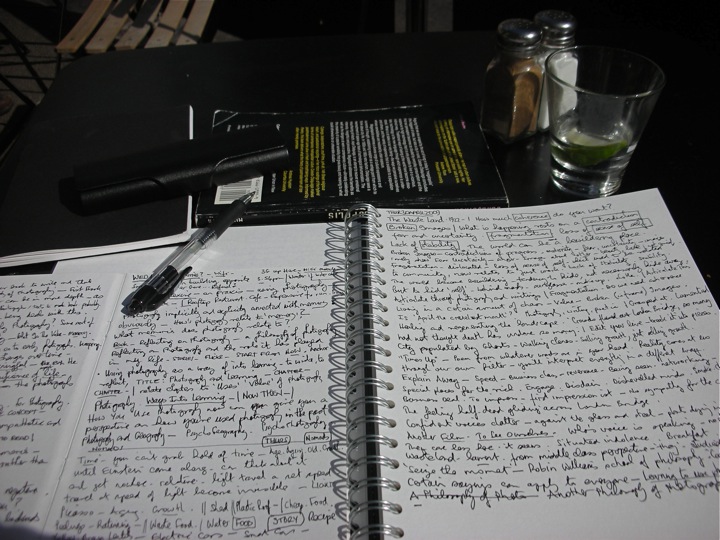
Remember, those notes will not help you unless you
actually look at them! (Picture from Flickr)
So my advice is very simple; look again at notes you wrote a few months ago, look again at worksheets from your previous classes, look again at previous chapters of your coursebook that you have already done, even look again at online lessons or exercises you think are too easy for you – you might be surprised by one or two small things you forgot about.

Learning new things is good, but re-learning those things you forgot is very important as well.  Looking again at your notes and old work does not take a lot of time but I guarantee it will make your language much stronger.
Newer Posts Older Posts Home